Driver welfare has moved beyond being simply a sign of a good employer. It is now an explicit priority for the Traffic Commissioners, with welfare, health and safety being incorporated into the guidance provided to operators and transport managers.
That means the question is changing. It is no longer enough to say that you care about your drivers. Can you show how you manage fatigue, health and wellbeing in the day-to-day operation of your business?
The Commissioners’ stated vision is “to champion safe, fair, and reliable transport for passengers and goods.” One of their four priority areas is Drivers:
“Supporting drivers through guidance, engagement and fair regulation while championing their welfare.”
That wording appears in the Traffic Commissioner Strategic Objectives 2026–2029, published on 30 September 2026. Here is what that direction could mean for your operation.
1. Why is welfare now a compliance conversation?
The Commissioners’ second objective is to promote a safe road transport industry that delivers compliance, fair competition and environmental protection. Their approach favours proportionate, evidence-based decisions and early intervention, rather than waiting until harm has occurred and the matter is dealt with only through criminal proceedings.
This does not create a new, standalone “welfare audit” or replace existing legal requirements. But it does make the connection between safe systems, driver treatment and operator compliance more visible.
The Commissioners say they will continue to promote driver welfare, health and safety, and embed those considerations within guidance for operators and transport managers. The 2025–26 Annual Report adds context on the pressures affecting drivers, including physical and mental health, isolation, working environments and medical fitness.
For you, the practical shift is straightforward: be ready to evidence what you do, not only to describe good intentions.
2. What does “embedding welfare in guidance” mean for your operation?
What might an auditor or Traffic Commissioner ask? It may begin with familiar compliance questions:
- How do you monitor drivers’ hours, rest and working time?
- How do you investigate infringements and act on them?
- Are routes and schedules realistic?
- Could any bonus scheme encourage unsafe driving or drivers’ hours breaches?
- How can drivers raise concerns about fatigue, health or working conditions?
- What happens after a concern or near-miss is reported?
These are not all new questions. Many sit within the systems you already use to manage drivers, tachographs and working time.
The published Operator Compliance Audits guidance does not prescribe a separate welfare audit. It does, however, include driver management and drivers’ hours in its audit framework. It also says an auditor should consider how bonus schemes are managed so drivers are not incentivised to breach drivers’ hours or endanger road safety.
So don’t shoot the messenger: fatigue is a compliance issue before it becomes a wellbeing issue. Drivers’ hours rules, breaks and rest exist to protect safety. But a compliant tachograph record is only part of the picture. Your scheduling decisions and the incentives you create matter too.
3. How does welfare connect with the systems you already run?
A transport manager does not need to start from scratch. The records you already keep can help show whether welfare is built into your operation.
| What you already manage | The welfare connection |
|---|---|
| Drivers’ hours and tachograph data | Can reveal patterns of fatigue risk, repeated infringements or pressure in the schedule. |
| Breaks, rest and working time | Help show whether shifts allow drivers to take required breaks and rest. |
| Route planning and rotas | Show how you balance delivery or service commitments with realistic driving and working time. |
| Driver training and induction | Demonstrate how you explain safety expectations, reporting routes and company procedures. |
| Incident and near-miss reviews | Show whether you learn from events and make changes where needed. |
The important step is to connect the records to decisions. If the data flags a concern, who reviews it? What action follows? Is that action recorded and checked?

4. What can you show if someone asks?
A short, usable evidence trail is more helpful than a polished policy nobody can follow. Consider whether you can produce the following:
- Hours, working-time and rest records, including how you review infringements and record follow-up.
- Rota and scheduling decisions: showing how routes and work are planned realistically, and who can adjust them when circumstances change.
- Bonus or performance arrangements, demonstrating that drivers are not rewarded for unsafe conduct or drivers’ hours breaches.
- Induction and ongoing training records, including relevant Driver CPC and company training.
- A clear route for raising concerns, with evidence that drivers can speak up about fatigue, health or safety without adverse consequences.
- Health and fitness checks, including relevant health declarations, eyesight and fitness information, handled appropriately.
- Incident and near-miss reviews, with actions, responsibilities and follow-up recorded.
- Facilities and support, where relevant, evidence of how you consider access to parking and suitable rest areas.
You do not need to turn every driver conversation into a form. You do need a sensible way to show what happened when a meaningful concern was raised and what your business did in response.

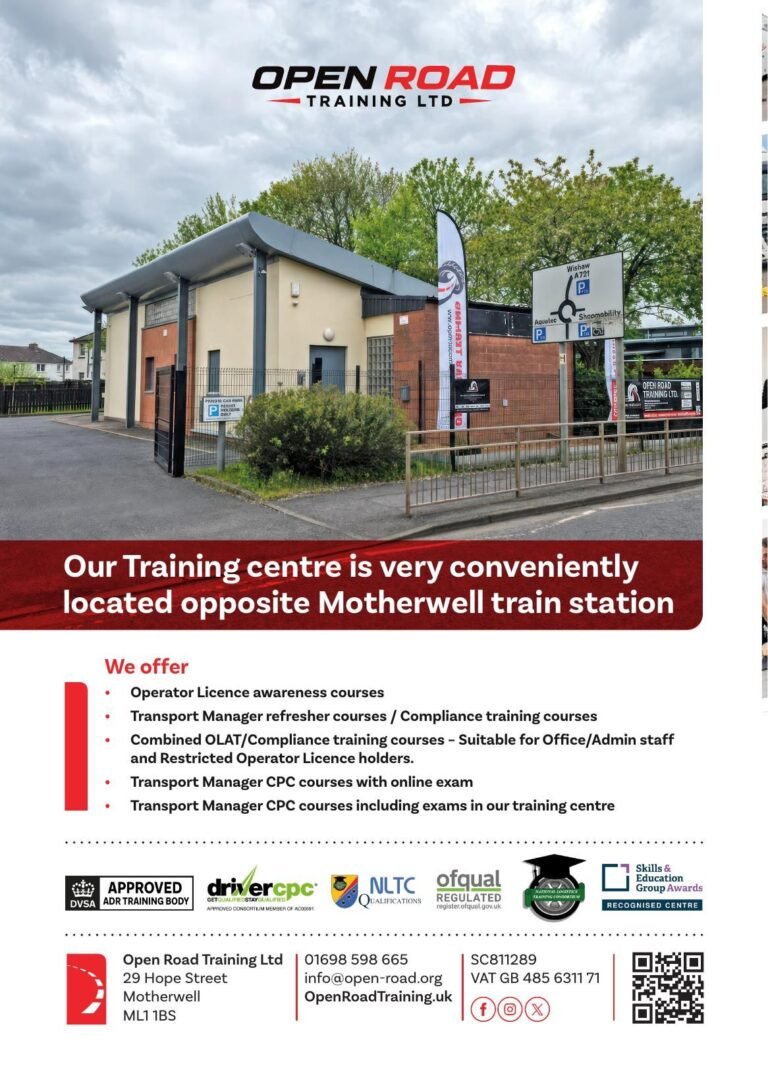
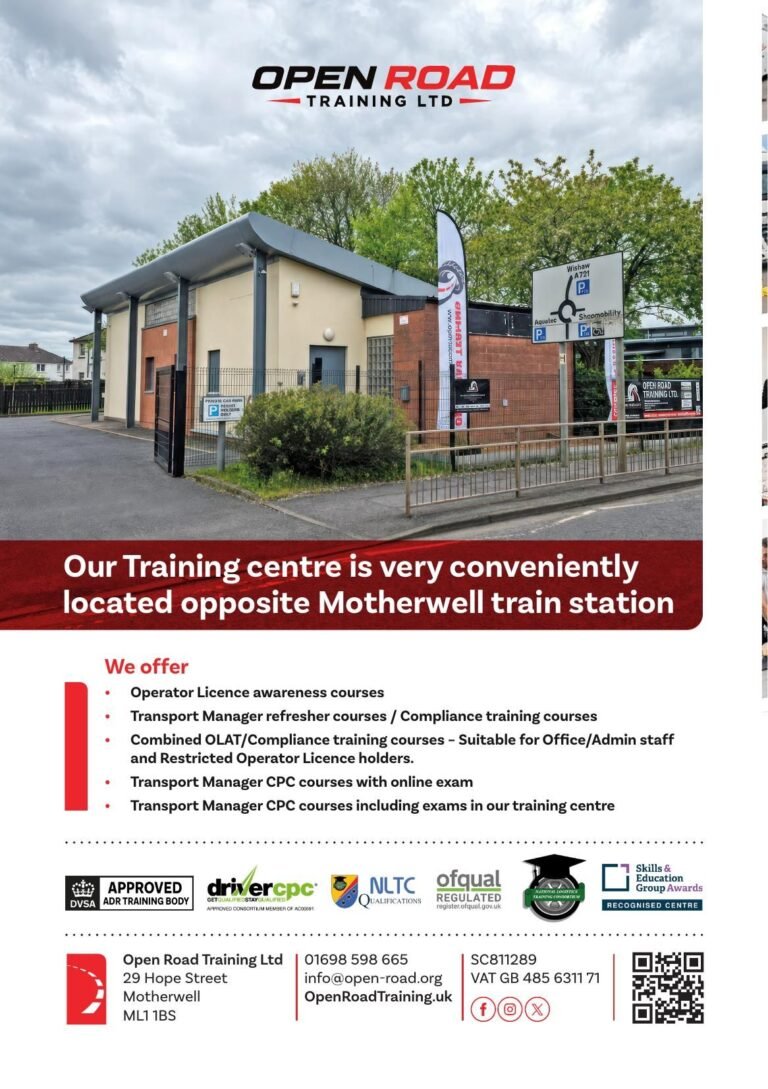
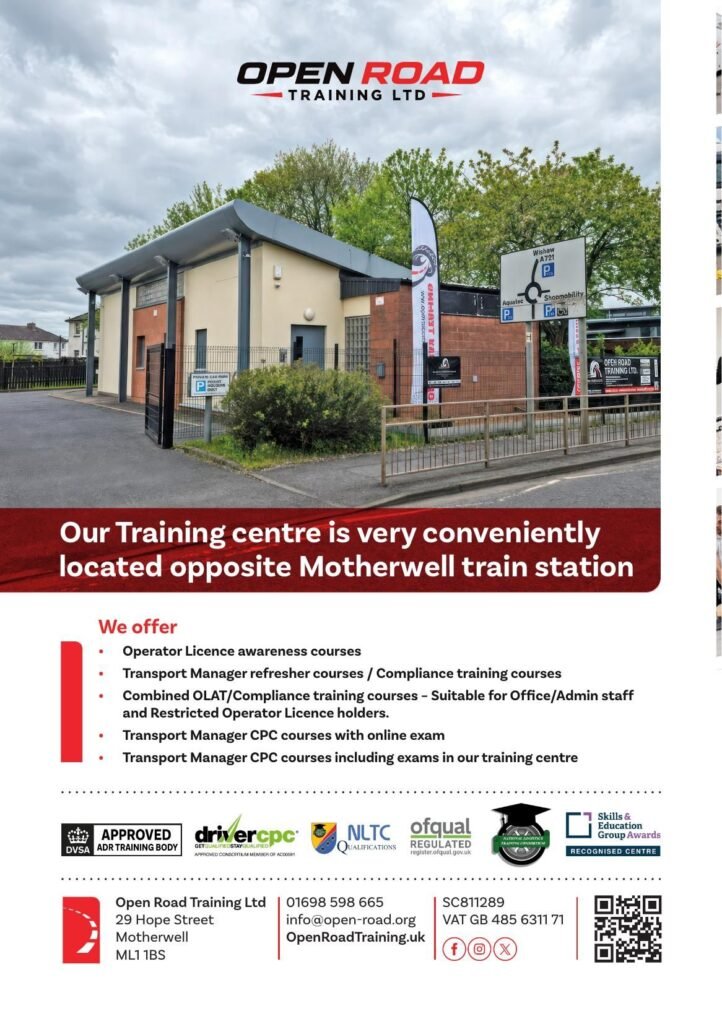
For a useful overview of our transport and logistics training, download the Open Road Training brochure.
5. Why does this matter to the Transport Manager?
The Transport Manager’s role is not simply to collect tachograph reports and file them away. The operator compliance framework looks at how the Transport Manager exercises continuous and effective management of transport activities.
If the system repeatedly identifies fatigue-related risks or drivers’ hours infringements, but nobody responds, that can point to a wider management weakness. A welfare blind spot may therefore become a compliance blind spot.
This is also why transport manager training matters. You need to know what to monitor, how to respond to the evidence and how to show that actions are followed through. The direction set by the Commissioners suggests welfare considerations may feature more often in audits, undertakings and public inquiry questions. The exact questions will depend on the case, but well-maintained records and clear responsibility put you in a stronger position to explain your decisions.
Our Transport Manager refresher and compliance training is built around DVSA expectations and the questions an auditor actually asks.

6. What training can help you put this into practice?
Open Road Training offers a two-day Transport Manager CPC Refresher and Compliance Awareness course for road haulage and passenger transport. It costs £350 plus VAT and focuses on practical compliance expectations.
If you are also a professional driver and attend in person, we can allocate up to 7 hours of Driver CPC for each day attended, up to a maximum of 35 hours, subject to eligibility and current requirements.
We also run Driver CPC courses every month at our Motherwell centre. You can choose standalone one-day modules or a full 35-hour week. Driver CPC can support professional development, including topics relevant to fatigue, health and safety, and drivers’ responsibilities.
For people new to transport management, we provide Transport Manager CPC training in both road haulage and passenger transport, with classroom and home-study options. Home study is £650 and includes six months of eLearning, printed manuals, remote learning and online exams. Eligible candidates can add up to 35 hours of Driver CPC for £75, subject to eligibility.
We also offer Operator Licence Awareness Training (OLAT) as an examination centre, with an Ofqual-regulated qualification or attendance-only option. Seven hours of Driver CPC may be available, subject to eligibility.

November courses currently scheduled include OLAT on 11 November, the two-day refresher on 12–13 November, and Driver CPC courses during the month. Mock tests are scheduled for 30 November–3 December, with an exam day on 4 December. Check current course dates for availability and details.
Courses are held at 29 Hope Street, Motherwell, ML1 1BS, opposite Motherwell train station. To discuss a course for you or your team, call 01698 598 665 or email info@open-road.org.
You can also download our brochure for an overview of our training offer.
7. Summary: can you show what you do?
Driver welfare is now an explicit Traffic Commissioner priority. That does not mean every operator needs a separate welfare department or a new set of complicated forms. It means your existing compliance systems should work together to support safe, fair and realistic operations.
Check that you can show how you manage fatigue, hours, rest, scheduling, training, driver concerns, health and follow-up. Make sure your Transport Manager has the authority and time to act on the information.
A good statement of intent is welcome. Evidence of thoughtful, consistent action is stronger.

Download the Open Road Training brochure for more information about our courses.