In short: no, not usually. The position on self-employed HGV drivers has hardened significantly. It is now widely accepted that genuine self-employed HGV drivers are extremely rare unless they are owner-drivers with their own operator’s licence and their own vehicle. If your drivers are engaged as “self-employed” in any other sense, your Operator Licence is at risk.
This is not a grey area that is quietly tolerated. The question now appears routinely in Traffic Commissioner public inquiry case directions, and the Upper Tribunal has upheld revocations where operators got it wrong. If your current arrangements rely on self-employed drivers who are not owner-drivers, this article explains why, and what compliant engagement looks like.
Download our brochure for the full picture of the training that supports compliant transport management.
1. What did the Bridgestep case decide?
The Upper Tribunal case of Bridgestep is the leading authority. During a public inquiry it emerged that most of the operator’s drivers had contracts stating that the operator did not “supervise, direct nor control” them.
The Traffic Commissioner considered that the “self-employed” label was not correct, and that in any event self-employed status was inconsistent with an operator’s responsibilities as a licence holder. The Operator’s Licence was revoked.
On appeal, the Upper Tribunal upheld that decision and found that unless they are an owner-driver, it is very rare for a lorry driver to be legally self-employed. Drivers generally work personally under the control of the operator and are not running any kind of business of their own. The arrangements were anti-competitive, and critically, the company and the transport manager could not control the drivers and did not have continuous and effective management of the transport operation.
That last point matters most for your licence. Continuous and effective management is a core requirement of operator licensing. A system built on self-employed drivers who answer to nobody was found to fail it.
2. What about drivers engaged through their own limited company?
Some operators pay drivers through the driver’s own company instead of employing them — so instead of paying Mr G Smith, the operator pays “G Smith Limited”.
The public inquiry case of Quick Road Transport Ltd shows this will not be tolerated. The Traffic Commissioner determined that the operator had effectively sub-contracted work to a number of these limited companies, meaning each “LTD driver” should have held their own Operator’s Licence. In the absence of one, the drivers’ use of the operator’s vehicles was unlawful, and the Operator’s Licence was revoked.
A company structure on paper does not change the substance of the working relationship.
3. What about agency drivers?
Agency drivers can be used legitimately — temporary workers supplied through a genuine driver agency serving multiple operators are one of the accepted routes. But the arrangement will still be scrutinised, and where an agency arrangement is a sham used as a front for self-employed drivers, the operator and transport manager are in danger of losing their good repute.
In the public inquiry case of Enero Logistics Ltd, the Traffic Commissioner considered that even where a legitimate agency arrangement exists, operators must meet their obligations under the Agency Worker Regulations 2010, ensure drivers receive an adequate induction, and exercise the same level of control and oversight as they would for directly employed drivers.
In summary, the accepted routes are:
- Employees
- Workers
- Temporary agency drivers supplied through a legitimate agency
- Owner-drivers, with their own operator’s licence and vehicle

4. Does self-employment change your Operator Licence duties?
No. If you are the operator, you cannot contract away your responsibility for complying with your licence and running safe, compliant operations.
Statutory Document 3’s general responsibilities set out the checks and management systems expected of a Transport Manager. Although that list is about the Transport Manager’s role, it is a useful practical checklist for operators using all drivers, whether they are employees or contractors.
| What should you manage? | Practical check |
|---|---|
| Driving entitlement | Confirm the driver holds the correct licence for the vehicle. Regular checks are usually carried out every three months. |
| Driver CPC | For vocational drivers who need it, check that their Driver Qualification Card (DQC) is valid. |
| Hours and working time | Monitor drivers’ hours, breaks and rest. Keep drivers’ hours records for at least 12 months and working-time records for at least 24 months. |
| Tachograph data | Where applicable, download vehicle-unit data at least every 90 days and driver-card data at least every 28 days. Review and retain the records. |
| Training and competence | Make sure the driver is trained and competent for the vehicle, equipment and work they carry out. |
| Defects and safety checks | Explain your walkaround-check and defect-reporting processes. Record reported defects and ensure they are dealt with promptly. |
The exact requirements depend on the operation and rules that apply to the vehicle and driver. But “they are self-employed” is not a reason to skip the checks.
5. Does the label “self-employed” settle the question?
No. The contract should reflect how the work actually happens. If a driver works as an integral part of your business, follows your set shifts and detailed instructions, drives your vehicle and is expected to do the work personally, the label alone may not determine their status.
Consider a driver who uses a company-owned lorry, is given regular shifts and routes, and has little independence over how the work is organised. That arrangement may look very different in practice from an owner-driver who supplies their own vehicle, takes on commercial risk and works for several customers.
Those are indicators, not a complete legal test. The question is fact-specific. HMRC or an employment tribunal may examine the real relationship, and a disagreement can create tax, employment-rights and other risks. Seek professional advice rather than relying on a contract heading.
5.1 Why does this matter to your licence?
The Traffic Commissioner’s guidance makes clear that a Transport Manager can delegate tasks but retains responsibility for their proper performance. It also states:
“The ultimate responsibility for supervising maintenance compliance rests on the operator and failures by employees or outside contractors is a matter for mitigation only.”
That quotation specifically concerns maintenance compliance. It reinforces a wider practical point: using a contractor does not, by itself, make your compliance responsibilities disappear.
If driver management or compliance systems fail, you could face DVSA enforcement and Traffic Commissioner action against your Operator Licence. Depending on the circumstances, action can include conditions, suspension, curtailment or revocation. Don’t shoot the messenger: the operator’s responsibility is not a paperwork technicality.
6. What about insurance and driver conduct?
Check the insurance arrangements before the driver starts work. Ask your insurer to confirm in writing that the driver, vehicle and use are covered under the actual arrangement. A policy may not respond as you expect if the contract and working relationship do not match what has been declared.
Your contract should also state who is responsible for matters such as vehicle checks, defect reporting, tachograph downloads, records, training and reporting incidents. A contract cannot transfer away your statutory duties, but clear responsibilities help everyone understand the system.
There is also a relevant point in Statutory Document 6 on vocational driver conduct. It says:
“As part of their general duty at work, a driver should inform any operator that they work for of convictions which relate to their conduct to drive Large Goods Vehicles or Passenger Carrying Vehicles.”
The wording is “any operator that they work for”. It does not distinguish between employed and self-employed drivers. Make sure your process tells drivers what relevant information to report and records what you do with it.
7. What should you check before engaging a driver who is not directly employed?
Use this checklist before the first journey:
- Check the driving licence and entitlement. Set up regular checks, usually every three months.
- Check the Driver CPC DQC, where the role requires one.
- Agree insurance cover. Confirm that the insurer knows who is driving, which vehicle is involved and how it will be used.
- Make the contract match reality. Avoid relying on a label that does not reflect the working arrangement.
- Explain your compliance systems. Cover walkaround checks, defect reporting, drivers’ hours, tachographs, breaks and rest.
- Record responsibilities and checks. Keep evidence of licence and DQC checks, training, records reviewed, defects and follow-up action.
- Review the arrangement. If the way the driver works changes, check whether the contract and status still reflect what happens in practice.
A driver may be self-employed for one arrangement and work under a different arrangement elsewhere. Focus on the facts of the work they do for your operation. Where the driver is an owner-driver with their own operator’s licence and vehicle, the position is different again — that is the one form of self-employment the Upper Tribunal recognises as capable of being genuine.
8. Is there a separate issue for passenger operators?
Yes, some vehicle-hire arrangements need extra care. Statutory Document 13 discusses PSV licensing and “dry hire” arrangements involving small passenger vehicles and limousines. A genuine dry hire may involve the customer hiring the vehicle and independently choosing and engaging a driver. But if the hire company connects the customer to a driver or driver supplier, the licensing position may differ.
Do not assume that calling an arrangement “dry hire”, or using a self-employed driver, settles whether a PSV Operator Licence is needed. Check the specific arrangement against the guidance and get specialist advice where required.
9. How can Transport Manager training help?
Good driver oversight depends on practical systems: licence checks, Driver CPC records, hours and tachograph monitoring, defect reporting and documented follow-up. Those are exactly the sorts of systems an auditor may ask you to explain.

Open Road Training Ltd provides a two-day Transport Manager CPC Refresher and Compliance Awareness course for road haulage and passenger transport. It costs £350 plus VAT and is built around DVSA expectations and the questions an auditor actually asks. View the course brochure.
You can also train towards the full Transport Manager CPC in Road Haulage or Passenger Transport. The home-study option costs £650 and includes six months of eLearning, printed manuals, remote learning and online exams. Read the course brochure.
Operator Licence Awareness Training (OLAT) is also available with an Ofqual-regulated qualification or an attendance-only option. Up to seven hours of Driver CPC may be available, subject to eligibility. The Traffic Commissioner increasingly expects evidence of transport management experience or OLAT completion. See the training brochure.
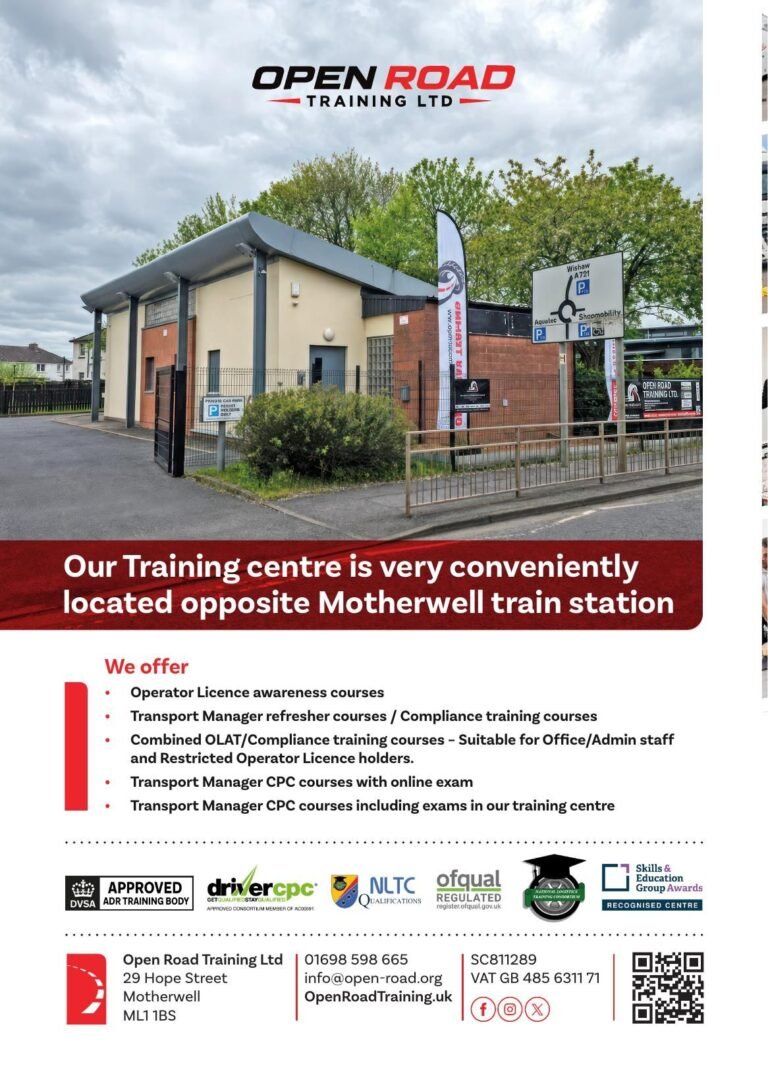
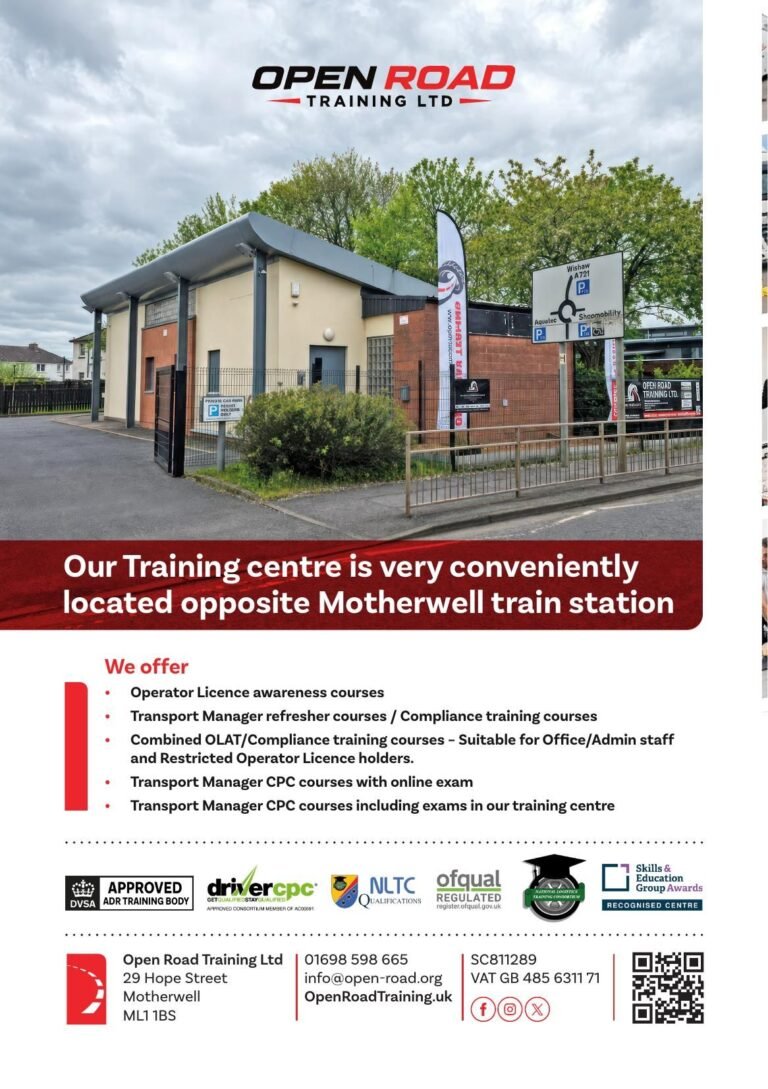
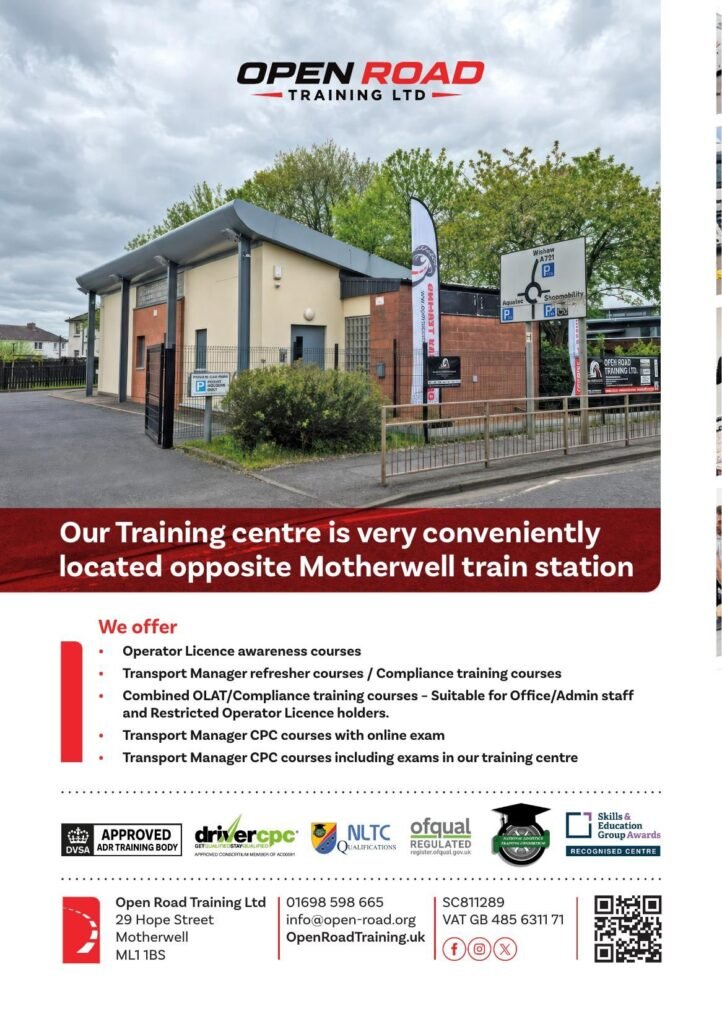
Full Transport Manager CPC courses are scheduled for November 2026. Check course dates for the latest availability. Open Road Training is at 29 Hope Street, Motherwell, ML1 1BS, opposite Motherwell train station. Call 01698 598 665 or email info@open-road.org. You can also download the full brochure PDF for details of every course.
10. The short answer
The accepted position is now clear: drivers should be engaged as employees, workers, temporary agency drivers through a genuine agency, or owner-drivers with their own operator’s licence and vehicle. Genuine self-employed HGV drivers outside the owner-driver model are extremely rare, and the Traffic Commissioner will look at what actually happens, not what the contract says.
Reviewing your driver engagement arrangements now can protect both your Operator Licence compliance and your good repute. Check insurance, confirm each driver’s entitlement and Driver CPC where required, and keep effective systems for hours, tachographs, training and defects. If you are unsure about your current arrangements, seek specialist legal advice before a public inquiry asks the question for you.

Official guidance and further reading
The legal analysis in this article draws on the Upper Tribunal decisions in Bridgestep and Quick Road Transport Ltd, and on the public inquiry decisions in Enero Logistics Ltd, as summarised in specialist road transport law commentary. For formal legal advice on your own driver engagement arrangements, speak to a road transport solicitor — this article is training-led guidance, not legal advice.