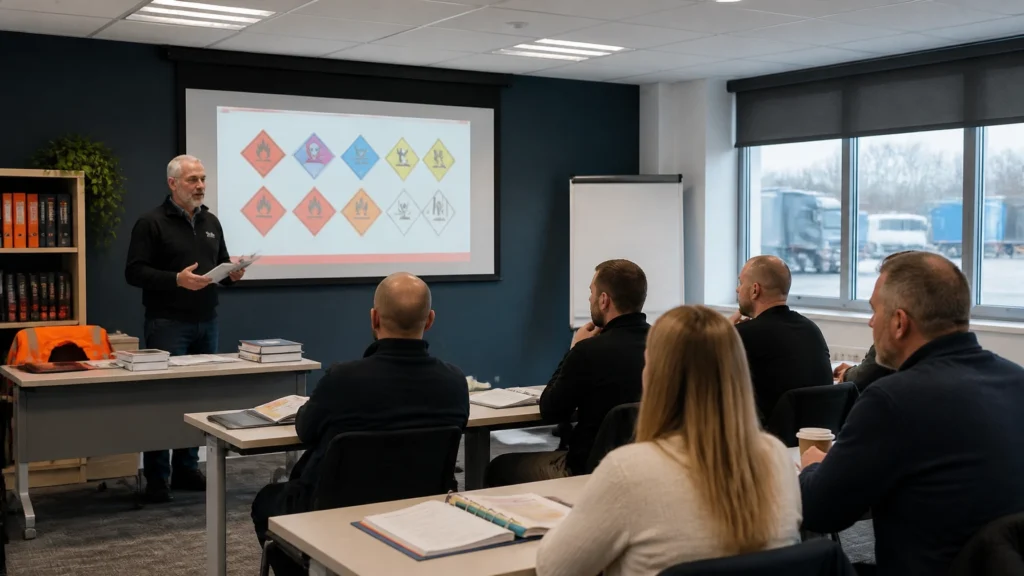
1. Want to become a Dangerous Goods Safety Adviser?
If your business is involved in the carriage of dangerous goods by road, you may need a Dangerous Goods Safety Adviser (DGSA).
A DGSA helps a business manage dangerous goods safely and lawfully. They advise on procedures, documentation, staff training, loading, packaging, vehicle operations, incident reporting and compliance with the relevant requirements.
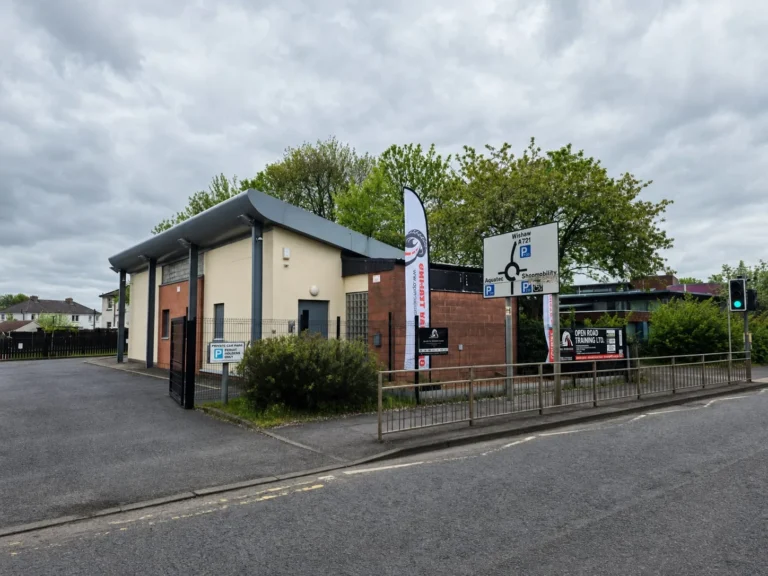
Open Road Training Ltd is running an in-class DGSA training course at our Motherwell centre from:
- Saturday 5 September to Wednesday 9 September 2026
- Five consecutive classroom training days
- Total cost: £500 including VAT and training materials
The course is designed to help you prepare for the DGSA examination route. If you need a recognised classroom-based option before the September exam, this is the time to book.
Check the course dates and secure your place.
1.1 Why does DGSA qualification matter?
What happens if your company consigns, carries, loads or handles dangerous goods without the right advice?
Depending on the activities involved, a business may be legally required to appoint a DGSA. The adviser can be an employee, a company director or an external specialist. The important point is that the adviser must be suitably qualified and able to carry out the role effectively.
Your DGSA can help you to:
- Identify dangerous goods and their transport requirements
- Check packaging, marking, labelling and vehicle placarding
- Review loading, unloading, stowage and segregation procedures
- Advise on staff training and written operating procedures
- Investigate accidents, incidents and dangerous occurrences
- Prepare or contribute to the required annual report
- Support better compliance across your transport operation
This is more than a box-ticking qualification. Your knowledge can have a direct impact on the safety of drivers, warehouse teams, customers, emergency services and members of the public.
“To qualify you need to pass dangerous goods safety adviser exams on: all dangerous goods classes, the core module, and either road, rail or inland waterways.”
, GOV.UK: Book a dangerous goods safety adviser exam
This means that you must understand both the general DGSA requirements and the specific transport mode you intend to advise on. For most transport and logistics businesses, the relevant mode is road.
2. What is included in the five-day classroom course?
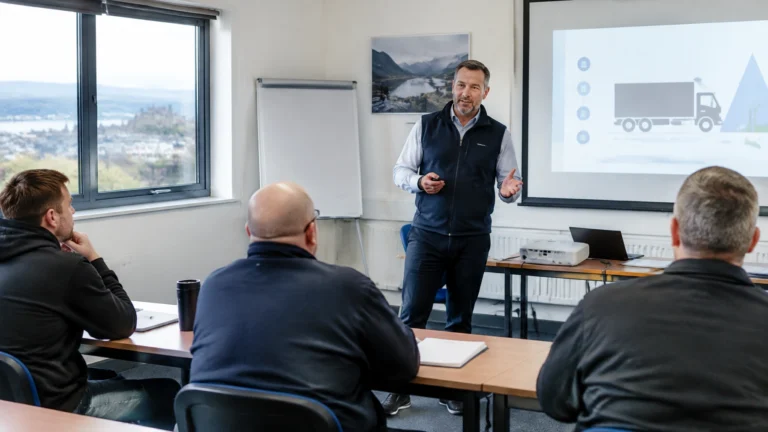
You will attend five days of structured, face-to-face training at the Open Road Training Ltd centre in Motherwell.
Classroom learning gives you the opportunity to ask questions as they arise. You can work through examples with your instructor and discuss how the rules apply to real transport operations.
2.1 Course dates
| Day | Date |
|---|---|
| Day 1 | Saturday 5 September 2026 |
| Day 2 | Sunday 6 September 2026 |
| Day 3 | Monday 7 September 2026 |
| Day 4 | Tuesday 8 September 2026 |
| Day 5 | Wednesday 9 September 2026 |
The examination date is Thursday 10 September 2026.
The course takes place immediately before the exam. That gives you a focused week to review the subject, practise applying the requirements and identify any areas where you need further revision.

2.2 Topics you are likely to work through
Your DGSA preparation will cover the principles and practical requirements that apply to the role, including areas such as:
- The legal and regulatory framework for dangerous goods transport
- Classification and identification of dangerous goods
- UN numbers and the Dangerous Goods List
- Packaging requirements
- Tanks, intermediate bulk containers and other transport equipment
- Marking, labelling and placarding
- Transport documentation
- Limited quantities and other relevant exemptions
- Loading, unloading, stowage and segregation
- Vehicle and transport unit requirements
- Emergency procedures and incident response
- Driver and staff responsibilities
- Compliance monitoring and reporting
- Examination preparation and use of reference material
The exact examination modules you need will depend on the work you intend to carry out as a DGSA. If you are advising a road transport business, you will normally need the Core, All Classes and Road examinations.
3. How much does the course cost?
The total course cost is:
£500 including VAT
This price includes:
- All five days of in-class DGSA training
- VAT
- All training materials supplied by Open Road Training Ltd
There are no separate charges from us for the training materials.
3.1 What about the exam fee?
The £500 covers the training course only.
You must book and pay for your DGSA examinations separately through DVSA. The exam fee is not included in the Open Road Training Ltd course price.
The official GOV.UK guidance states that you pay for each subject you take. It currently gives the cost as £135 per exam subject. Check the DVSA booking information for the latest fees and payment instructions before applying.
This is an important distinction:
| Item | Included in £500 course price? |
|---|---|
| Five days of classroom training | Yes |
| VAT | Yes |
| Training materials (Digital only) | Yes |
| DGSA examination booking | No |
| DGSA examination fees | No |
| Exam venue arrangements | No |
Don’t shoot the messenger : the exam must be arranged separately. Booking the training course does not automatically enter you for the examination.
4. How do you book the DGSA examination?
You must book your exam directly with DVSA using the official government booking process:
Book a Dangerous Goods Safety Adviser exam through GOV.UK
The examination date connected with this course is 10 September 2026.
For the September 2026 sitting, GOV.UK currently lists:
- First application date: 12 June 2026
- Last application date: 27 August 2026
- Exam date: 10 September 2026
You must apply and pay within the stated deadline. Do not wait until the last minute. Your training place and your examination booking are two separate arrangements, so make sure you complete both.
4.1 Which examinations do you need?
To qualify as a DGSA, you generally need to pass:
- Core module
- All dangerous goods classes
- One transport mode, such as Road
If your role involves road transport, the Road module is normally the relevant option. If your business operates across different transport modes, you may need to consider additional requirements.
You should review the official DVSA guidance carefully and select the examinations that match your intended DGSA duties.
5. Why are the training materials supplied as a PDF?
We will supply you with a PDF containing all training materials.
You can print the materials yourself if you wish to use them during the exam.
This point is important:
A digital copy of the training materials is not allowed for use during the examination.
If you intend to refer to your materials during the exam, you must print them in advance. Do not rely on having the PDF available on a laptop, tablet or other electronic device.
5.1 Plan your printed materials before exam day
You should:
- Download the PDF as soon as you receive it.
- Review the materials during the training week.
- Print the pages you want to take with you.
- Organise the printed documents so you can find information quickly.
- Check the official exam instructions for any further requirements.
Printed reference material is only useful if you can navigate it under time pressure. Use the course to become familiar with the structure, terminology and key information.

6. Who should attend this course?
This course may be suitable if you are:
- Preparing to become a DGSA for your own business
- A transport manager taking on dangerous goods responsibilities
- An experienced dangerous goods professional seeking formal DGSA qualification
- Responsible for compliance within a haulage or logistics company
- Advising a business that consigns or transports dangerous goods
- Looking for structured classroom preparation before the September exam
You may also be an employer booking training for a member of your management or compliance team.
Before booking, consider the dangerous goods activities your business carries out. Your examination choices should match the scope of the advice you will provide.
7. Why choose in-class training?
Could you study independently? Possibly. However, classroom training offers several practical advantages.
You can:
- Ask an instructor to explain difficult subjects
- Work through examples with other candidates
- Discuss real transport scenarios
- Build confidence using the reference material
- Identify gaps in your knowledge
- Stay focused throughout an intensive training week
- Prepare alongside other professionals with similar responsibilities
Dangerous goods legislation can be detailed. A classroom environment gives you a clear learning structure and access to experienced guidance when a subject becomes complicated.

8. Book your September DGSA training place
The course starts on Saturday 5 September 2026 and finishes on Wednesday 9 September, with the exam scheduled for Thursday 10 September.
The total cost is £500 including VAT and all training materials.
Remember:
- The course is delivered in class at our Motherwell centre.
- The training runs over five consecutive days.
- Materials are supplied as a PDF.
- You must print any materials you wish to use in the examination.
- The exam is not included in the course price.
- You must book and pay for the exam separately with DVSA.
- The exam date is 10 September 2026.
Visit our Course Dates page to book your place.
If your business needs DGSA advice, or you want to develop your own professional qualifications, this course gives you a focused opportunity to prepare. Book early, arrange your separate DVSA exam booking and start your preparation with confidence.