In practice, you cannot use a “self-employed” label to treat a driver like a permanent member of your team while sidestepping the responsibilities that come with that arrangement. A key question for many businesses is: Can operators use self employed drivers?recent Traffic Commissioner decision shows why the reality of the working relationship matters more than the wording on an invoice or contract.
The case, reported by Motor Transport on 3 November 2026, involved SCS Haulage. Its licence was curtailed and the company received a formal warning after a public inquiry examined its use of drivers described as “self-employed” and agency-supplied.
1. What happened in the SCS Haulage case?
A DVSA vehicle stop in January 2026 led to further enquiries. One driver said he was self-employed and invoiced SCS Haulage through his own limited company. But he had worked full-time for the operator for around seven years.
A DVSA specialist visit in April also found drivers supplied through agencies. SCS said it paid the agencies, which then paid the drivers. The operator’s director and Transport Manager, Simon Christopher Short, argued that IR35 and the company’s size meant the agencies were responsible for employment compliance.
Traffic Commissioner Richard Turfitt rejected that as an answer to the question of operational control. He found that drivers were inducted into SCS’s systems, instructed by the operator, expected to follow its procedures and managed through its drivers’ hours and infringement processes.
“What was described, did not amount to a self-employed driver.”
The Commissioner imposed a formal warning and conditions on the Standard International licence. The operator’s authorised fleet was reduced to 20 vehicles and 35 trailers. The licence was not revoked, but the outcome made the practical point plainly: a label does not protect your operator’s licence if the working arrangement tells a different story.
You can read the Motor Transport report and the Traffic Commissioner’s published decision.
2. What makes a driver look like an employee?
There is no single magic phrase that settles a driver’s status. The Traffic Commissioner looked at how the arrangement worked in practice. Indicators included regular work, expected minimum hours, no right to send a substitute, use of the operator’s vehicles and equipment, and being covered by the operator’s procedures.
| Question to ask | Why it matters |
|---|---|
| Does the driver work regularly for you? | A settled, ongoing pattern may look less like temporary cover. |
| Are they expected to work set or minimum hours? | This can suggest an ongoing commitment. |
| Can they genuinely send a substitute? | If you require that particular driver to attend, it points towards personal service. |
| Do they use your vehicles and equipment? | This may indicate that the work is integrated into your operation. |
| Do you give instructions and apply your procedures? | Control over how work is done is relevant. |
| Do your hours checks and infringement processes apply to them? | Managing them like your employed drivers can be evidence of operator control. |
These are indicators, not a tick-box test. The overall relationship matters. If a driver works regular shifts in your vehicles, follows your instructions and is managed through your systems, calling them self-employed does not make the arrangement safe.
3. Why does the contract label not decide the issue?
The Senior Traffic Commissioner’s Statutory Document 3 discusses the wider principles used to assess employment status. The questions associated with Ready Mixed Concrete include whether a person provides work and skill for remuneration, whether the other party exercises sufficient control, and whether other factors point away from employment.
This means you need to look at the whole relationship, not just the contract, tax treatment or name on an invoice. IR35 is not a blanket exemption from your road transport responsibilities. In the SCS case, the Commissioner said the operator’s reliance on IR35 did not answer the question of who controlled the drivers.
The Upper Tribunal’s Bridgestep decision is another reminder that arrangements described as self-employment can fail the requirement for continuous and effective management. If you rely on drivers to run your operation, you need to understand how they are engaged and how they are controlled.
HMRC’s published position is also that genuine self-employment among commercial vehicle drivers is rare, other than in owner-driver situations. Misclassification can have employment and tax consequences as well as licensing implications.
4. Are agency drivers allowed?
Yes, genuine temporary agency workers can be part of a compliant staffing plan. But an agency is not a way to hand over your operator responsibilities.
Make sure the arrangement is genuinely temporary, and check your obligations under the Agency Worker Regulations. You still need to induct, instruct and monitor agency drivers. You must check that they hold the correct licence entitlement and Driver CPC qualification, and apply appropriate tachograph analysis and infringement follow-up.
In the SCS case, the Commissioner was concerned that some arrangements were more than temporary. The drivers were treated much like permanent staff, with the operator managing their work through its own systems.
5. Is there a genuine self-employed option?
The narrow, recognised example is an owner-driver operating under their own distinct operator’s licence and vehicle. That is different from a driver using your vehicle, under your instructions, while invoicing you through a personal limited company.
Be particularly careful where a driver’s limited company is presented as the subcontractor. In the Quick Road Transport Ltd inquiry, the Commissioner found that limited companies using the operator’s vehicles under that arrangement were operating without their own required authority; the licence was revoked, with financial standing also an issue. The lesson is to get specialist advice before treating an “LTD driver” arrangement as a simple paperwork change.
6. What can’t you outsource?
You can use an agency to supply temporary workers. You cannot contract out your core statutory responsibilities as the licence holder.
You remain responsible for effective driver management, operational control and tachograph compliance. Your named Transport Manager also has a duty to exercise continuous and effective management. They may delegate tasks, but that does not remove their responsibility to make sure those tasks are carried out properly.
The SCS decision also demonstrates that a Transport Manager may attract the Traffic Commissioner’s attention where driver control is weak. The Transport Manager’s role is not simply to file infringement reports. They need to ensure that issues are identified, followed up and managed.
7. What should you check now?
Review your arrangements before an audit, vehicle stop or public inquiry forces the issue.
- Check how each driver actually works. Consider regularity, expected hours, substitution, vehicles and equipment, instructions, and disciplinary procedures.
- Employ permanent drivers as employees. Do not rely on an agency or personal service company to disguise a permanent arrangement.
- Use genuine agencies for genuinely temporary cover. Induct and manage supplied drivers, and check relevant agency-worker obligations.
- Verify owner-driver arrangements. Confirm the driver has the appropriate vehicle and their own operator’s licence.
- Check insurance. Make sure your cover reflects who drives, whose vehicles are used and how the work is arranged.
- Apply the same compliance checks to every driver. Check licence entitlement and Driver CPC/DQC status, analyse tachograph records and follow up infringements.
If you are unsure, seek specialist road transport legal advice. This article is training-led guidance, not legal advice.
8. How can training help?
A Transport Manager needs to understand not just the rules, but how to put them into practice. Our two-day Transport Manager CPC Refresher and Compliance Awareness course is built around DVSA expectations and the questions an auditor may ask, including driver management and supervision. It costs £350 plus VAT, is suitable for road haulage and passenger transport, and offers up to seven Driver CPC hours per day attended, subject to eligibility.
Open Road Training also offers Operator Licence Awareness Training (OLAT), with an Ofqual-regulated qualification or attendance-only option. Traffic Commissioners increasingly ask for evidence of transport management experience or OLAT completion.
For a full qualification, our Transport Manager CPC training covers Road Haulage and Passenger Transport. Classroom and home-study options are available; home study is £650 and includes six months’ eLearning, printed manuals and remote online exams. The November schedule includes OLAT on 11 November, refresher training on 12–13 November, CPC blocks through November, mock tests from 30 November to 3 December and exam day on 4 December.

View the Open Road Training brochure for course information.

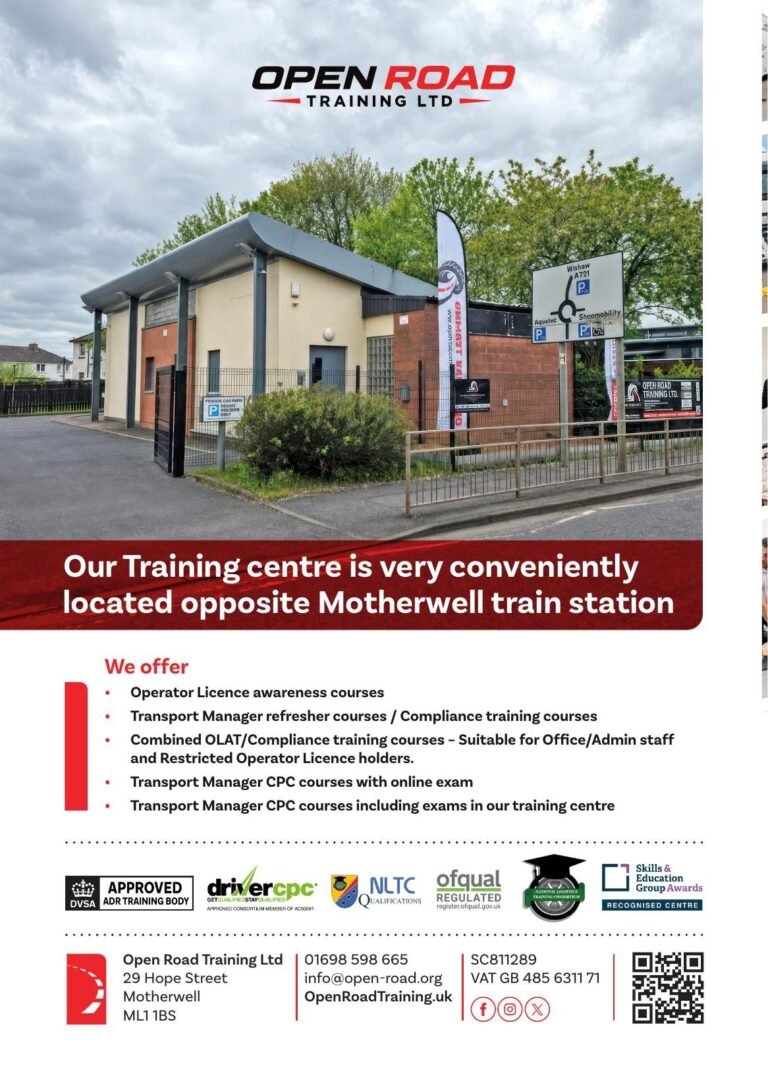
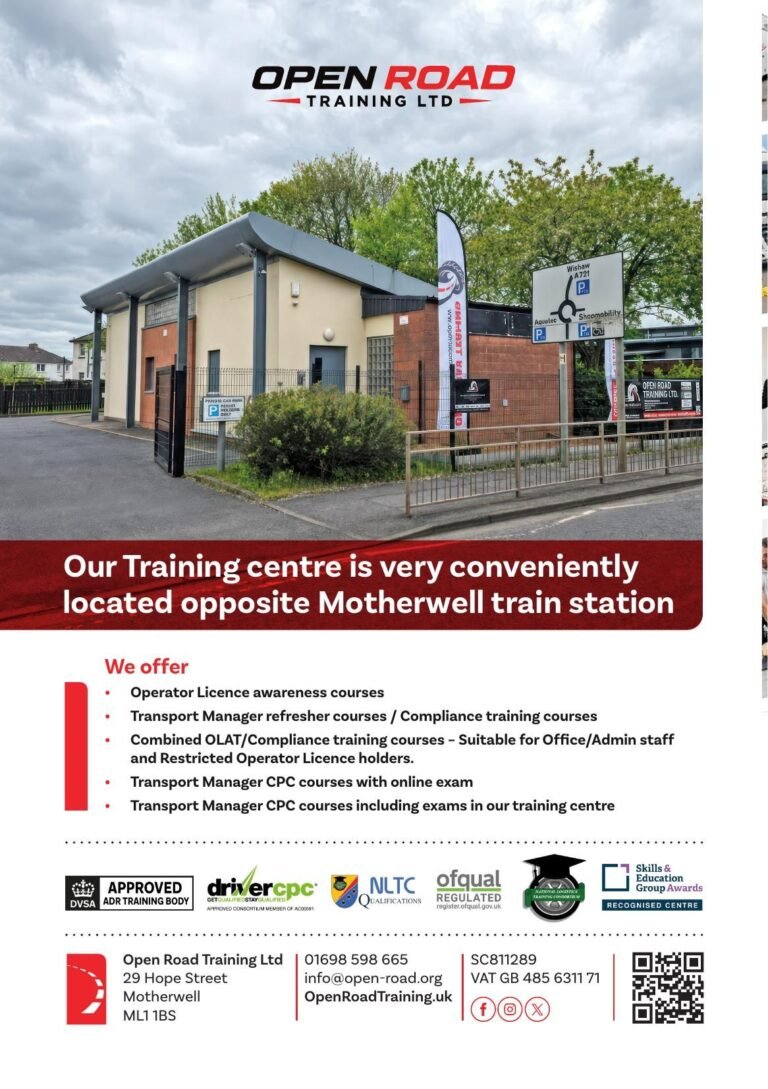
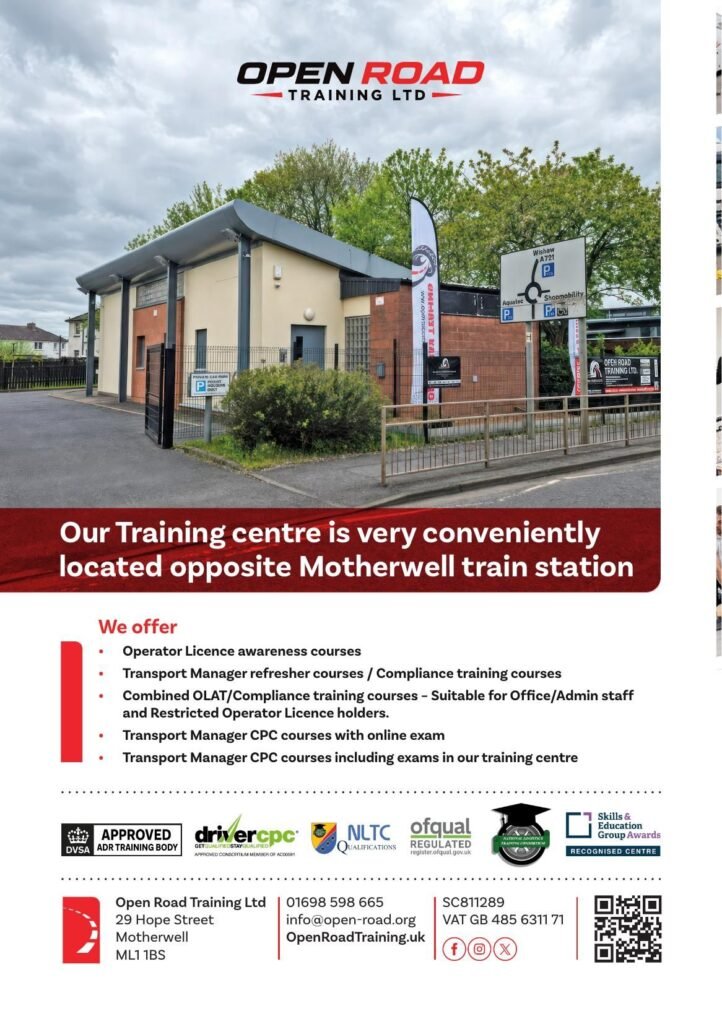
Driver CPC and ADR courses also run regularly. You can check the latest course dates or contact us on 01698 598 665 or info@open-road.org. Our training centre is at 29 Hope Street, Motherwell, ML1 1BS, opposite Motherwell train station.

Download the full brochure or ask us about training for your team.
9. The short answer
Can operators use self-employed drivers? Not as a shortcut for employing drivers in practice. Genuine temporary agency workers and genuine owner-drivers may be options, but labels, limited companies and IR35 arguments do not remove your responsibility to control and manage your transport operation.
The SCS Haulage case is a timely reminder to review your driver arrangements, support your Transport Manager and make sure the paperwork matches the reality on the road.