Getting your Transport Manager CPC is a massive milestone in any transport career. It’s the “gold standard” qualification that opens doors to higher salaries and serious management roles. But let’s be honest, it has a reputation for being a bit of a beast. Our Transport Manager CPC FAQ is here to help answer those questions you may have been wondering but afraid to ask.
At Open Road Training, we get asked the same questions every week. Whether you are looking for a transport manager online course or you want to sit in a classroom with us, you probably want to know what you’re letting yourself into.
In this guide, I’m going to break down the top 20 questions we hear most often. We’ve kept it simple, direct, and honest.
1. Is the Transport Manager CPC hard? The first question of the Transport Manager CPC FAQ
This is the big one. To put it bluntly: yes, it is. But “hard” doesn’t mean “impossible.”
The Transport Manager CPC is a Level 3 qualification, which puts it on the same academic level as an A-Level. The national pass rates usually hover between 30% and 60%. Don’t let those numbers scare you, though. Those who fail often underestimate the amount of work required.
The Reality Check:
You cannot simply “show up” and expect to pass. It requires a lot of dedication. We always tell our students to expect to spend just as much time studying at home as in the classroom. If you’re doing a 10-day course with us, you need to be hitting the books every evening. It’s not just about learning facts; it’s about understanding how to apply them to real-world scenarios.
2. What is the exam format?
The exam isn’t just one long paper. It’s split into two distinct parts, usually taken on the same day:
- Multiple Choice: 60 questions covering the entire syllabus. You’ll have 2 hours to complete this.
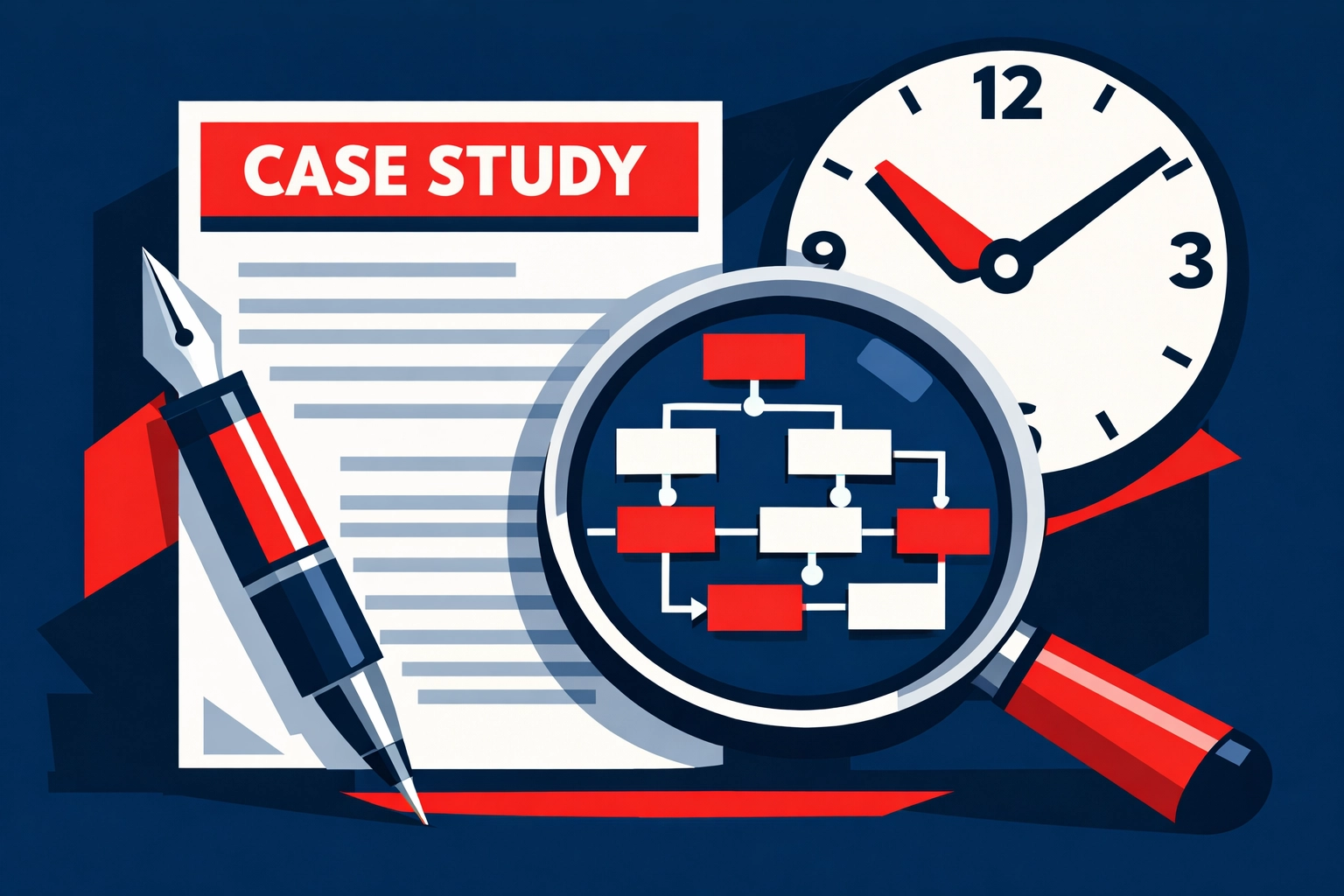
- Case Study: This is a scenario-based written exam. You’ll be given a business situation (like a haulage company expanding into Europe) and asked to solve problems regarding scheduling, costs, and compliance. You will be given 2 hours and 15 minutes on this one.
3. What is the pass mark?
You need to pass both sections to get your certificate.
- For the Multiple Choice, the pass mark is generally 70% (42 out of 60).
- For the Case Study, it’s usually between 28-34 / 60 you need to score.
The Case Study is where most people think they will struggle because it requires a deeper understanding of how to actually run a business, rather than just memorising rules. That said, you do have your notes with you that you can quote for this part. Many people struggle with the multiple-choice exam, as even though the answer is directly in front of you, if you don’t know that material, then if you take a guess, there’s a 75% chance your answer won’t be correct.
4. Can I take notes in the exam?
For the Multiple Choice? No. You’re on your own there.
However, the Case Study is “open-book.” This means you can bring in your training manuals and your own bound notes.
Pro Tip: Don’t think an open-book exam is “easy.” If you spend the whole exam looking for answers in your book, you will run out of time. Your manual should be a safety net, not a crutch. Getting to know your book and where to find the answer is covered on day one of your classroom course with us.
5. How long is the qualification valid?
Great news here: the Transport Manager CPC is a lifetime qualification. Once you’ve passed, the certificate never expires.
However, keep in mind that the industry changes fast. While the paper lasts forever, the Traffic Commissioner expects you to stay up to date. This is why many people choose to take a 2-day refresher course every 5 years. You can find more information on this in Stat Doc 3
6. Do I need a driving licence?
Believe it or not, no. You do not need a car or HGV licence to sit the exams or to hold the qualification. You are being tested on your ability to manage a transport operation, not your ability to reverse a trailer.
7. What is the difference between Road Haulage and Passenger Transport?
There are two “flavours” of the CPC:
- Road Haulage: For those managing goods vehicles (HGVs).
- Passenger Transport: For those managing buses and coaches.
The core of the course is similar (business law, accounts, etc.), but the technical parts regarding vehicle standards and scheduling are very different. We offer both of these courses separately, as your trainer will be qualified in your chosen area.
8. Can I study online?
Absolutely. If you can’t make it to our centre, we offer a transport manager course online. Modern technology means you can get the same high-quality instruction from your living room. We provide a full eLearning suite and digital materials to support you. Whether you want a transport manager online course or a transport manager cpc home study kit, we’ve got you covered.
9. How long does the training take?
It depends on your learning style.
- Intensive Classroom: This is usually 10 days of solid instruction spread over 2-3 weeks
- Home Study: This typically takes 2–3 months of consistent evening and weekend work.
If you’re looking to get qualified quickly, our 10-day intensive course is the most popular route. You can check out our upcoming Course Dates here.
10. Are exam fees included?
At Open Road Training, we don’t believe in “hidden extras.” When we quote you a price, it is all-inclusive. That means your training, your materials, and your exam fees are all covered in one go. Don’t shoot the messenger, but some providers will lure you in with a low price and then slap £200+ of exam fees on top at the end. We don’t do that.
11. Do I have to attend a course?
Legally? No. You can buy a Transport Manager CPC Home Study Pack and book the exams yourself.
However, and this is a big “however”: the pass rates for self-study are significantly lower. Having a tutor to explain the “why” behind the rules makes a massive difference, especially for the Case Study.
12. What are my legal responsibilities?
As a Transport Manager, the buck stops with you. Your job is to ensure:
- Vehicles are roadworthy and maintained.
- Drivers follow all EU/UK drivers’ hours and tachograph rules.
- The company remains compliant with the terms of its Operator’s Licence.
If things go wrong, you are the one who will be standing in front of the Traffic Commissioner.
13. What is an “External” Transport Manager?
Not every company needs a full-time, in-house manager. An External Transport Manager is a consultant who works for smaller operators.
The rules are strict here: you can work for a maximum of 4 operators with a combined total of 50 vehicles.
14. Is a Transport Manager a legal requirement?
If a company holds a Standard National or Standard International Operator’s Licence, they MUST have a qualified Transport Manager. If they don’t, they lose their licence. It’s that simple. Only “Restricted” licence holders (who only carry their own goods) are exempt, and even then, they should still have management in place who understand the requirements; they just do not need the formal qualification
15. How many vehicles can one manager handle?
Guidance suggests one full-time manager can handle up to 50 vehicles. However, if the operation is complex (double-shifting, multiple depots), the Traffic Commissioner might require greater management support. This is another question that often comes up in our Transport Manager CPC FAQ.
16. Can I be both an owner and a Transport Manager?
Yes! Many small business owners get their CPC so they don’t have to hire an external consultant. You just need to meet the criteria for “Good Repute” and have the financial standing required for the licence.
17. What is “Good Repute”?
This is a legal term meaning you are of good character. If you have serious criminal convictions or a history of transport law “incidents,” you could lose your “Good Repute.” Without it, your CPC certificate is essentially useless for management roles.
18. How often do I need a “Refresher” course?
As mentioned earlier, the certificate doesn’t expire, but the Traffic Commissioners expect a 2-day refresher every 5 years. It shows you are committed to CPD (Continuous Professional Development). We offer these at Open Road Training, and they are a great way to stay sharp.
19. What happens if I fail one part of the exam?
Don’t panic! If you pass the Multiple Choice but fail the Case Study (or vice versa), you only have to resit the part you failed. You don’t have to redo the whole thing. You keep your “pass” for the other half.
20. Why choose Open Road Training?
We know there are many transport management courses across the UK. We stand out because we treat you like a professional. Our 10-day course is £1500 (inc VAT), and we include:
- Printed materials for home and class.
- A 1-year subscription to our TM App (which includes editable documents for your own branding).
- Full eLearning suite access.
- “Buy now, pay later” options to help with the cost.
We administer our exams via NLTC (National Logistics Training Consortium) or SEGA (Skills Education Group Awards), ensuring you get a nationally recognised qualification.
Transport Manager CPC FAQ
Summary Table: Quick Facts
| Feature | Details |
|---|---|
| Level | Level 3 (A-Level Equivalent) |
| Pass Rates | 30% – 60% National Average |
| Format | Multiple Choice & Case Study |
| Validity | Lifetime |
| Study Time | 10 Days (Classroom) or 2-3 Months (Home) |
| Cost | £1500 inc VAT (at Open Road Training) |
Ready to take the leap?
The Transport Manager CPC course is a challenge, but it’s one of the best investments you’ll ever make in yourself. If you’re ready to put in the work, we’re ready to give you the tools to succeed.
Check out our training courses here to find a date that works for you, or drop us a message if you want to chat more about our transport manager cpc home study options.
This has been a hot subject recently, and spaces fill up fast. Don’t wait until the next exam cycle( get started now!)
The Transport Manager CPC FAQ was written for information purposes only and will be subject to change as rules and regulations change.