
1. The direct answer
There is no blanket legal rule requiring every Transport Manager to attend refresher training at fixed intervals. This raises the question: Do Transport Managers need refresher training? A Transport Manager CPC does not havea routine renewal date like a driver’s Driver CPC.
But that does not mean you can qualify once and forget the rules. The Senior Traffic Commissioner’s Statutory Document 3: Transport Managers explains that you must be professionally competent and effectively and continuously manage transport activities. In practice, that means keeping your knowledge current and being able to show how you do it.
So the balanced answer is: refresher training is not universally mandatory, but CPD is an important professional expectation and evidence may be expected in specific circumstances. If you are wondering whether your knowledge needs a refresh, the sensible next step is to check the situations below, not wait for an auditor to ask.
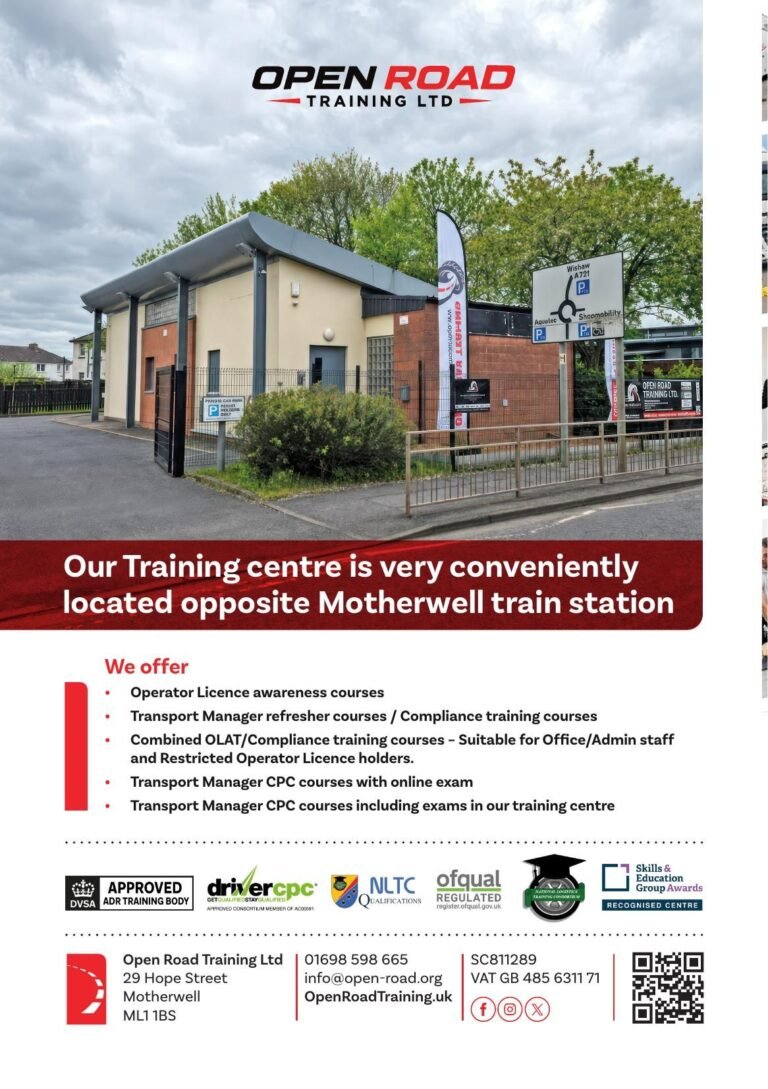
View Open Road Training’s course brochure.
2. When may you be asked for evidence of CPD?
Statutory Document 3 says a Transport Manager should expect to provide evidence of their capacity to meet the statutory duty through continuing professional development (CPD) in the situations below.
| Situation | What it means for you |
|---|---|
| You have not been specified as a Transport Manager during the previous five years | If you are returning to the role, you may need to show that your knowledge is current. |
| Your Transport Manager qualification is more than 10 years old | The age of the qualification may prompt a request for evidence of more recent professional development. |
| You are applying to be on more than one licence, or your proposed hours are below the starting point | You may need to demonstrate that you have the knowledge and capacity to manage the work effectively. |
| An operator’s licence is being renewed | Your current knowledge and ability to fulfil the role may be relevant. |
| Your management is being considered at a Public Inquiry | The Commissioner may examine whether you have exercised continuous and effective management, including whether you have kept your knowledge up to date. |
The Senior Traffic Commissioner’s November 2018 announcement highlighted three circumstances: no recent appointment within five years, a qualification over 10 years old, and a Public Inquiry considering your management. The current Statutory Document 3 also identifies licence applications involving multiple licences or lower proposed hours, and licence renewal.
These are circumstances where evidence may be expected, not an automatic instruction for every Transport Manager to retake the CPC exam. If it has been some time since you completed CPD, Statutory Document 3 identifies a two-day Transport Manager CPC refresher course as the starting point for evidence.
3. What does an audit expect?
The Operator Compliance Audits framework asks whether a refresher course or CPD has been completed within five years of the certificate or last training. It also expects Transport Manager CPD in line with Statutory Document 3.
This is an audit framework, not a separate law that automatically requires every Transport Manager to take a course every five years. But it is a clear sign of what may be checked. Keep records of your learning: certificates, course details, dates and other evidence of relevant CPD. “I’m sure I read something about that” is less persuasive when someone asks you to show it.

4. Why can your knowledge go stale?
Transport rules change. A CPC you earned five, ten or fifteen years ago was valuable training, but parts of the operating environment have moved on since then. That is not a criticism; it is the nature of transport compliance.
Recent examples include:
- Driver CPC routes: Since December 2024, drivers choose between National and International routes, which have different course lengths and rules.
- Tachograph records: For relevant HGV journeys between the UK and EU, drivers need 56 days of tachograph records. UK-only domestic journeys remain at 28 days. If your operation has mixed work, your procedures need to account for both.
- Smart Tachograph 2: From 1 July 2026, goods vehicles over 2.5 tonnes used internationally for hire or reward must have Smart Tachograph 2 fitted. Newly registered vehicles have required it since 24 December 2025.
- DVSA inspection manuals: Revised HGV and PSV inspection manuals took effect on 1 April 2026. They include changes to defect descriptions and areas such as tachograph seals and printouts, speed limiter wording and tyre markings.
- ADR: ADR 2027 takes effect on 1 January 2027. The temporary authorisation allowing remote theory delivery for ADR driver training runs only to 31 December 2026.
- Traffic Commissioner priorities: The 2026–2029 Strategic Objectives include driver welfare and modernisation of the operator-licensing service.
You do not need to memorise every update the moment it appears. You do need reliable ways to monitor changes and translate them into your operation’s procedures.

5. What does “continuous and effective management” mean in practice?
Statutory Document 3 is clear that the role must be real and active, not a name on a form. You must have the time, authority and genuine connection to the operator to manage transport activities effectively.
That means more than holding a certificate. You should be able to explain how you oversee compliance systems, maintenance, drivers’ hours, tachograph records, driver licensing, training and corrective action. You remain responsible for the role even where you delegate tasks.
The document’s Annex A gives indicative weekly hours by fleet size. These are starting points, not fixed rates. The Traffic Commissioner may consider your other work, the demands of the business and your contractual relationship with the operator.
It also distinguishes an employed, internal Transport Manager from a self-employed, external one, using principles from the Ready Mixed Concrete case. If you are external, you need a genuine contract for services. In either arrangement, you should not be nominated in name only.
6. What if you cannot show recent CPD?
A lack of CPD evidence does not automatically mean you have broken the law or will lose your repute. The Commissioner looks at the circumstances and, crucially, whether you have actually exercised continuous and effective management.
However, if your performance is being considered at a Public Inquiry, an inability to show current knowledge may weaken your case. Your own repute as a Transport Manager can be at stake, as well as the operator’s compliance position. The GOV.UK guide to becoming a Transport Manager also explains that you must keep your knowledge up to date and that a Commissioner can require further training in some circumstances.
If you receive a notice or are preparing for an inquiry, get advice specific to your situation. Training can support your professional development, but it is not a substitute for legal advice.
7. What does good CPD look like?
A two-day refresher is the recognised starting point in Statutory Document 3 where it has been some time since you completed CPD. Beyond that, good practice means you can:
- Keep a record of refresher courses and other relevant learning.
- Monitor DVSA updates, Traffic Commissioner decisions and statutory guidance.
- Explain the current rules that affect your operation.
- Show that compliance systems are working, and what you did when they were not.
A certificate is useful evidence. Your ability to apply what you have learned is what makes it meaningful.
8. Open Road Training’s refresher course
Open Road Training offers a two-day Transport Manager CPC Refresher and Compliance Awareness course for both road haulage and passenger transport. It is built around DVSA expectations and the questions an auditor is likely to ask. The course costs £350 plus VAT.
The November course runs Thursday 12 to Friday 13 November 2026. This week. See course dates and availability or read the course details. Up to seven hours of Driver CPC per day attended can be allocated, up to a maximum of 35 hours, subject to eligibility and current requirements.
If you also need the full Transport Manager CPC, Open Road offers Road Haulage and Passenger Transport training in classroom and home-study formats. You can view the Transport Manager CPC course or download our brochure.

9. The short version
- No, there is no blanket legal requirement for every Transport Manager to attend a refresher at set intervals.
- Your CPC does not have a routine renewal date, but you must keep your professional knowledge current.
- Statutory Document 3 identifies specific circumstances when you should expect to provide CPD evidence.
- The Operator Compliance Audits framework asks about refresher training or CPD within five years of your certificate or last training.
- If CPD has lapsed, the guidance identifies a two-day refresher as the starting point for evidence.
Open Road Training provides transport manager training for both road haulage and passenger transport. The refresher is at 29 Hope Street, Motherwell, ML1 1BS, opposite Motherwell train station. Call 01698 598 665 or email info@open-road.org to discuss the right option for you. ADR and Driver CPC courses also run monthly; separate one-day ADR Class 1 and Class 7 options, including exams, are available.
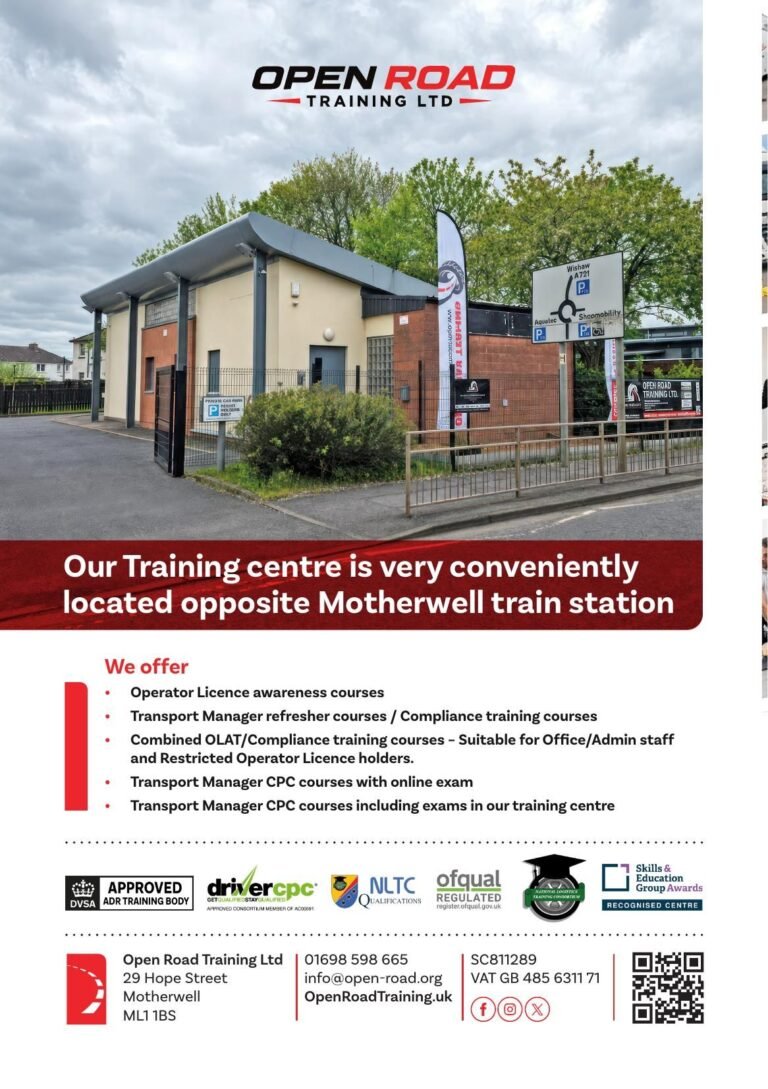
Download the Open Road Training brochure.